
The Brewed Business Boom: Inside the World of Modern Coffee Shops and Why They’re Brewing Big Bucks
The Coffee Shop Boom Isn’t About Coffee
Most explanations for the rise of modern coffee chains focus on product, better beans, better brewing, better branding.
That’s not where the shift is.
What’s changed is how these spaces are used.
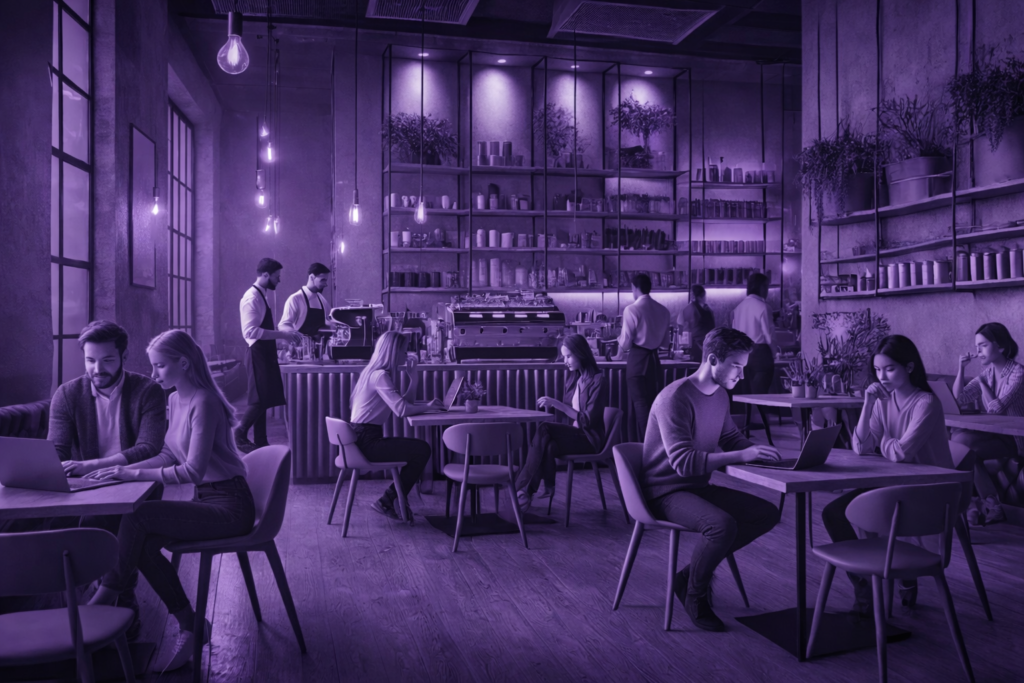
Coffee shops are no longer built for quick consumption. They’re designed for extended use, working, meeting, spending time without a clear endpoint. The coffee is still important, but it’s no longer the reason people stay.
It’s the reason they enter.
From Consumption to Occupation
Earlier, the model was simple:
Order → Drink → Leave
Now it looks different:
Enter → Settle → Stay → Repeat
This changes how the entire business operates.
Seating isn’t just capacity – it’s inventory.
Ambience isn’t aesthetic – it shapes behavior.
Menu depth isn’t variety – it increases time spent and frequency of visits.
The objective is no longer just to sell coffee.
It’s to keep people in the space long enough for the economics to work.
What’s Actually Being Sold
The product has quietly shifted.
Customers are paying for:
- a place to work without commitment
- a socially acceptable place to spend time
- an environment that feels productive
Coffee sits at the center of this, but it’s not the core value.
It’s the entry point into a space where time can be spent without friction.
Why This Model Works
From a business perspective, this is a high-frequency category with strong behavioral consistency.
People don’t visit occasionally. They build routines.
Once a brand gets the basics right, location, consistency, and environment, it can replicate the same experience across multiple outlets. That’s where scale comes from.
The margins on coffee help, but what investors are really buying into is predictability:
- repeat behavior
- steady footfall
- consistent spend
Where the Model Starts to Strain
The same design that makes the model work also creates pressure.
If people stay longer, table turnover drops.
That becomes a problem when demand exceeds available space.
This is already visible in cities like Bangalore, where some cafés have started introducing table occupancy charges for customers who stay for long periods with minimal orders.
It’s a practical response to a structural issue.
When tables are occupied but revenue doesn’t increase, the system breaks:
- new customers walk in but can’t find seating
- peak hours get constrained
- revenue per square foot drops
What was designed as an advantage, encouraging people to stay, starts working against the business.
The Trade-Off
This model depends on a balance that’s difficult to maintain:
- Longer stays increase perceived value
- But reduce customer throughput
- Which directly impacts revenue
At some point, businesses have to intervene.
That’s where policies start showing up, minimum billing, time limits, or occupancy charges.
What This Tells Us
This isn’t just about coffee shops.
It’s an example of a broader shift.
Businesses are increasingly built around:
- time spent
- environment design
- behavioral patterns
But once time becomes part of the product, it also needs to be controlled.
You can’t optimize for “stay longer” indefinitely.
There’s always a point where the system needs correction.
Closing Thought
The growth of coffee chains isn’t driven by coffee.
It’s driven by how well they’ve understood where people want to spend their time, and how to design spaces around that.
But like most systems built on behavior, it works well only within limits.
Push it too far, and the same thing that drives growth becomes the constraint.